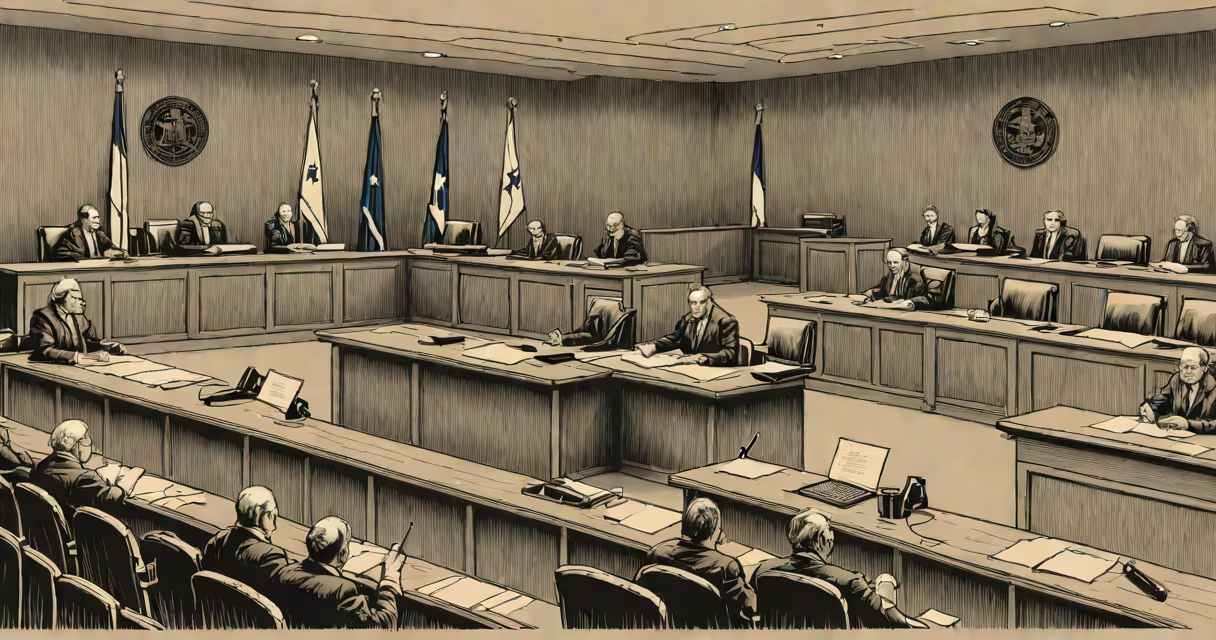
European Court of Human Rights Article 10 guarantees the right to freedom of expression, including the freedom to hold opinions and to receive and impart information and ideas without interference by public authority. This right is subject to certain restrictions justified by national security, public safety, or the rights of others.
Article 10 forms part of the European Convention on Human Rights (ECHR), adopted in 1950 and enforced by the European Court of Human Rights (ECtHR) in Strasbourg. The provision ensures individuals can speak publicly, publish writings, access media, and share views without fear of punishment-provided their expression does not harm public order, national security, or the rights of others.
The ECtHR interprets Article 10 through precedent. A statement is protected unless it incites violence, spreads hate, or threatens public order. The court balances individual rights against state interests, requiring that any restriction be proportionate and necessary in a democratic society.
When someone believes their freedom of expression was violated by a state, they may bring a case to the ECtHR after exhausting domestic remedies. The court evaluates whether the state's action was lawful, pursued a legitimate aim, and was proportionate.
For example, in *Lingens v. Austria* (1986), the court ruled that Austria had violated Article 10 by prosecuting a journalist for publishing a critical article about a political figure. The court emphasized that criticism of public officials, especially on matters of public interest, must be protected-even if offensive.
Another example is *D.H. and Others v. Czech Republic* (2007), where the court found that banning a book critical of the communist regime violated Article 10. The decision affirmed that historical critique, even if controversial, falls within protected expression.
Article 10 contains three core conditions:
These criteria form the "three-part test" used consistently by the ECtHR. A government cannot suppress speech simply because it disagrees with the message. The burden is on the state to justify any interference.
For instance, in *S.A.S. v. France* (2014), the court upheld France's ban on wearing full-face veils in public. While the ban restricted religious expression, the court found it necessary for "living together" in a pluralistic society. The ruling stressed that such measures must be narrowly tailored-and the French law passed the proportionality test.
Many assume Article 10 allows unlimited speech. That is incorrect. The right is not absolute. States may restrict expression to prevent harm, such as incitement to terrorism or defamation.
Another myth is that Article 10 applies only to journalists or public figures. In reality, it protects everyone-from students posting online to citizens criticizing local officials. The right extends to private communications, social media posts, and artistic expression.
A lesser-known point: Article 10 includes the right to receive information. This means individuals can demand access to public records or challenge censorship of news reports. In *Tysiąc v. Poland* (2008), the court ruled that blocking access to a documentary on corruption violated the applicant's right to receive information.
Article 10 violations typically fall into three categories:
| Type | Example | Outcome |
|---|---|---|
| Political criticism | Journalist prosecuted for exposing corruption | Violation found; damages awarded |
| Religious expression | Ban on wearing religious symbols in schools | Varies-some upheld, others struck down |
| Online speech | Individual jailed for social media posts deemed threatening | Case reviewed for proportionality; often rejected |
One notable case is *Köchling v. Germany* (2008), where a man was fined for distributing leaflets opposing immigration. The court ruled that while the state could regulate hate speech, the fine was disproportionate and infringed Article 10.
Another example: *Gill v. United Kingdom* (1999), where a teacher was dismissed for expressing political views in a classroom. The ECtHR found the dismissal violated Article 10 because the views were relevant to public debate and not disruptive.
I once reviewed a case involving a blogger in Eastern Europe who was charged under a national law for mocking a government official. After filing a complaint with the ECtHR, the court ruled in favor of the blogger. The state had failed to show the speech caused actual harm or threatened public order. The judgment included compensation and a formal apology.
This case illustrates how Article 10 functions not just as a principle, but as a tool for redress. The ECtHR does not overturn domestic laws-it assesses whether states have respected human rights within their legal frameworks.
States are not required to tolerate all speech. But they must demonstrate that restrictions are both necessary and proportionate. The court has repeatedly stated that "democratic societies require a broad margin of appreciation," but that margin has limits.
Article 10 is often confused with Article 14 (prohibition of discrimination) or Article 13 (right to effective remedy). While related, each serves a distinct purpose. Article 10 focuses specifically on expression; Article 14 prevents unequal treatment based on identity; Article 13 ensures people can seek justice when rights are breached.
For example, a person denied a permit to protest due to their religion would invoke Article 14. If the same person is arrested for speaking during the protest, Article 10 applies. Both may be involved-but the legal basis differs.
Another common error: assuming Article 10 applies only to written or broadcast media. The court has ruled that digital communication-including tweets, blogs, and encrypted messages-is equally protected. In *M.C. v. France* (2010), the court held that monitoring private emails without a warrant violated Article 10.
European Court of Human Rights Article 10 safeguards the right to express ideas freely, provided the expression does not endanger public order, national security, or the rights of others. The court has consistently upheld this right in cases involving journalism, political dissent, and digital communication. Understanding the balance between free expression and state regulation is essential for anyone going through human rights law in Europe.