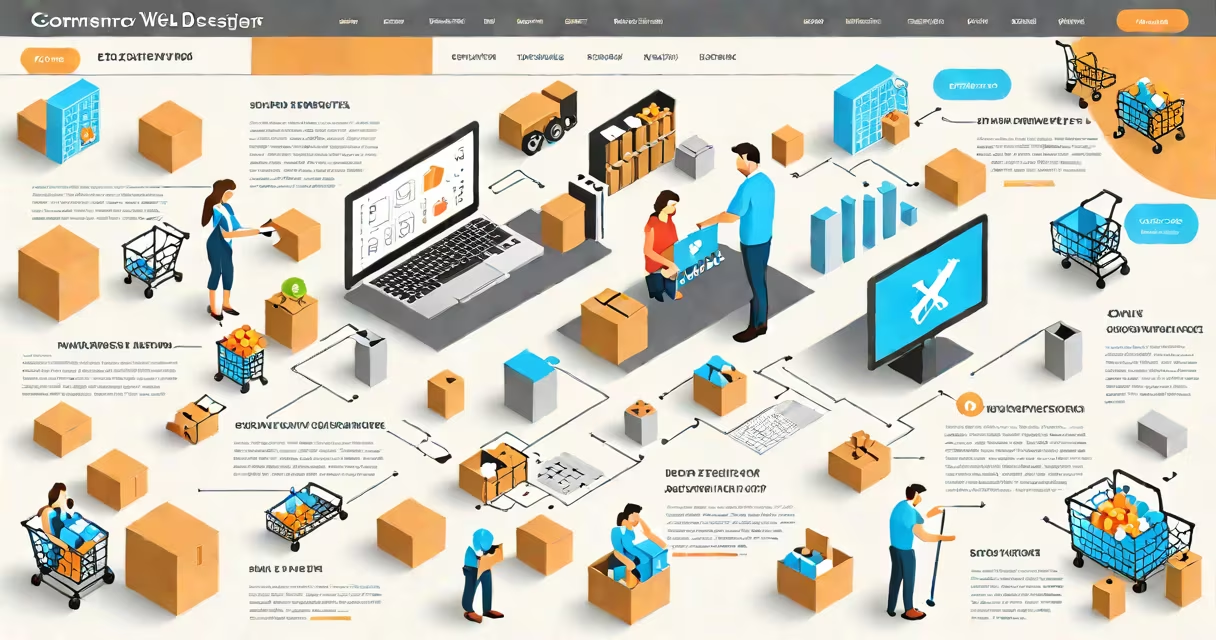
An ecommerce web designer is a specialist who creates and optimizes online retail websites to drive sales through intuitive navigation, compelling visuals, and smooth checkout experiences. They combine visual design, user experience principles, and platform-specific technical knowledge to turn product catalogs into profitable digital storefronts.
These professionals work across platforms like Shopify, WooCommerce, BigCommerce, and custom-built systems. Their role extends beyond aesthetics-they ensure every element supports conversion, from image loading speed to button placement. A well-designed site reduces bounce rates and increases average order value.
According to the U.S. Bureau of Labor Statistics, demand for web designers specializing in digital commerce grew 12% between 2021 and 2022, outpacing web development growth. This reflects rising consumer reliance on online shopping, especially post-pandemic.
Design begins with understanding the client's brand identity, target audience, and product offerings. The designer then maps out user journeys-how customers browse, compare, add to cart, and complete purchase. This process involves wireframing, prototyping, and iterative testing.
Key tasks include selecting color schemes that align with brand psychology, choosing fonts for readability at small sizes, and optimizing images for fast load times. For example, a study by Google found that 53% of mobile users abandon sites that take longer than three seconds to load.
Once the layout is approved, the designer collaborates with developers to implement responsive layouts that function flawlessly across devices. They also integrate essential features such as secure payment gateways, inventory tracking, and customer account systems.
Top ecommerce web designers master both creative and technical domains. They use tools like Figma, Adobe XD, or Sketch for interface design and have working knowledge of HTML, CSS, and JavaScript for implementation. Familiarity with CMS platforms is critical-Shopify, Magento, and WordPress with WooCommerce are standard.
Designers must understand conversion rate optimization (CRO) principles. This includes placing high-impact elements above the fold, using clear calls-to-action (CTAs), and minimizing form fields during checkout. Research from Baymard Institute shows that 28% of shopping cart abandonment occurs due to unexpected costs-designers address this by displaying fees early.
They also apply accessibility standards. The Web Content Accessibility Guidelines (WCAG) 2.1 require contrast ratios of at least 4.5:1 for text and interactive elements. Designers validate compliance using automated tools like axe or WAVE.
| Platform | Common Design Constraints | Key Tools Used |
|---|---|---|
| Shopify | Theme customization limited to Liquid templating language; requires theme editor access | Figma, Shopify Theme Editor, Liquid syntax guides |
| WooCommerce (WordPress) | Dependent on plugin compatibility; performance affected by poorly coded themes | WordPress Customizer, Elementor, WPML |
| BigCommerce | Advanced product filtering and changing pricing require API integration | BigCommerce Studio, Postman for API testing |
Small businesses launching their first online presence rely on these designers to create professional, trustworthy websites. A 2023 report by Statista revealed that 64% of U.S. consumers judge a company's credibility based on its website quality.
Larger retailers hire designers to refresh outdated interfaces or scale existing sites for seasonal traffic spikes. During Black Friday, for instance, a well-optimized site can handle 10x normal traffic without crashing-this requires load-balancing architecture and efficient asset delivery.
One example: a boutique skincare brand in Portland saw a 42% increase in monthly revenue after redesigning their Shopify store. The new layout reduced steps to checkout from six to three, improved image clarity, and added trust badges. These changes were validated through A/B testing conducted by the designer.
Many confuse an ecommerce web designer with a general web designer or a developer. A general web designer may build a portfolio site or blog but lacks expertise in product categorization, cart logic, or secure transaction handling. An ecommerce web designer focuses specifically on retail functionality.
Another myth is that design is purely aesthetic. While visuals matter, the most effective designs prioritize usability. For example, placing the "Add to Cart" button near the product image increases click-through rates by up to 25%, according to a 2022 study by Nielsen Norman Group.
Designers also differ from marketers. They don't run ads or manage email campaigns-but they build the landing pages those campaigns direct traffic to. A poorly designed page undermines even the best marketing strategy.
I once helped a local artisanal candle maker launch a website in 10 days. The client had no prior digital experience and needed a site that reflected their handmade ethos. We focused on authentic photography, minimal text, and a single prominent "Shop Now" button on each product card.
During testing, we discovered that mobile users were dropping off at the checkout stage. The issue wasn't the design-it was a hidden form field that triggered validation errors. Fixing it increased completion rates by 37%. This showed me that even subtle technical flaws can derail user experience.
The role of an ecommerce web designer goes far beyond making a site look good. They shape the entire customer process, balancing brand expression with measurable results. Whether designing for a startup or scaling a national retailer, their work directly impacts sales, retention, and reputation.