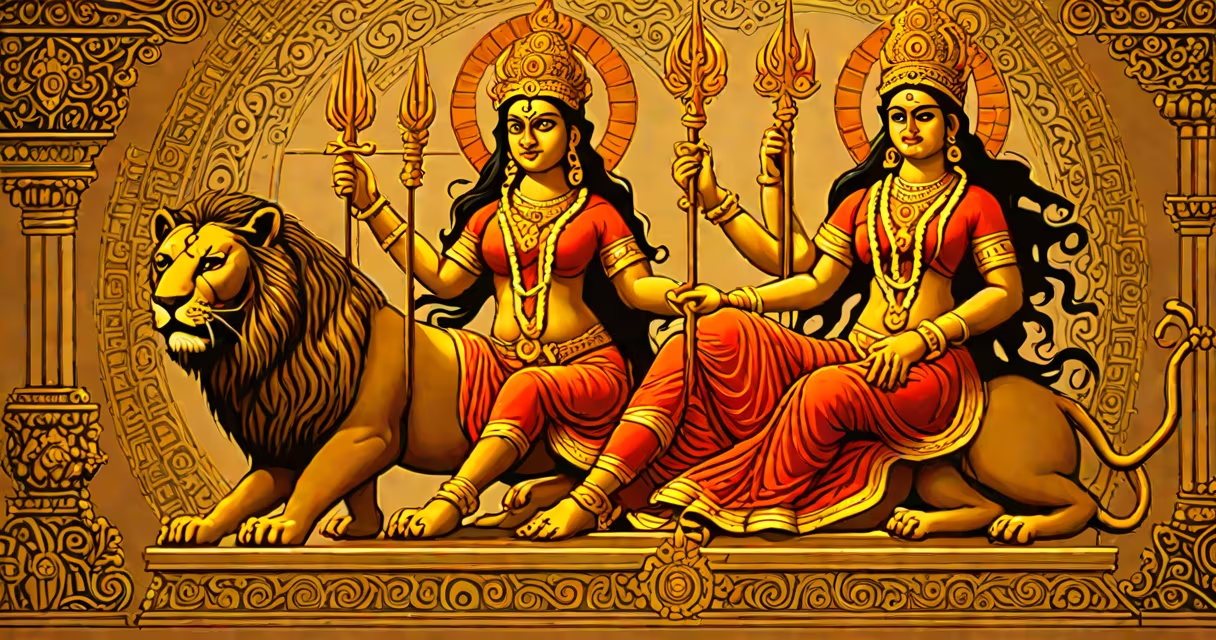
A durga maa image is a visual representation of the Hindu goddess Durga, typically showing her in a useful, multi-armed form mounted on a lion, wielding weapons and symbolizing protection against evil. These depictions appear in temples, homes, and during festivals like Durga Puja, especially in Bengal and eastern India.
Durga Maa is portrayed with six to eight arms, each holding a weapon-sword, trident, mace, bow, discus, or lotus-representing different aspects of cosmic power. Her face is serene yet fierce, eyes focused on destruction of demonic forces. She rides a lion, which symbolizes control over ego and desire. The lion's roar echoes the sound of Om, linking her to universal consciousness.
These images are not symbolic abstractions-they are functional objects in worship. Devotees offer flowers, incense, and food before durga maa images during daily rituals and festivals. In Kolkata, thousands of temporary pandals house elaborately crafted durga maa images during Durga Puja, with some statues weighing over 10 tons and requiring crane lifts for installation.
In Hindu practice, the durga maa image serves as a focal point for darshan-the sacred seeing of the deity. Devotees believe that gazing upon the image allows them to perceive divine presence. This is not passive viewing; it involves intention, breath control, and silent prayer. During the nine-day Navaratri festival, families perform aarti (waving of lamps) before the image twice daily.
Temples in Varanasi and Puri display large durga maa images carved from stone or cast in bronze. The 12th-century Durga Temple in Bhubaneswar features a 12-foot-tall sandstone carving of Durga slaying Mahishasura, the buffalo demon. The image's facial expression is calm, emphasizing victory through balance-not rage.
Modern digital versions exist too. Many households project high-resolution durga maa images onto walls during Diwali and Navaratri. Apps like Pray.com allow users to set a durga maa image as their phone's lock screen, with automatic prayer reminders. The image becomes a daily devotional tool, not just a static artwork.
Durga maa images vary by region, reflecting local artistic traditions and theological interpretations. The most common styles include:
| Style | Region | Key Features | Example |
|---|---|---|---|
| Bengal School | West Bengal, Bangladesh | Delicate brushwork, soft colors, ornamental borders | Abanindranath Tagore's 1906 painting of Durga riding a lion, with floral motifs and muted gold leafing |
| South Indian (Dravidian) | Tamil Nadu, Kerala | Stylized forms, rigid symmetry, temple carvings | Rock-cut sculpture at Mamallapuram, 7th century CE, showing Durga with four arms and a tiger |
| Western Indian (Gujarati) | Gujarat, Rajasthan | Use of terracotta, bright pigments, folk motifs | Hand-painted clay figurines from Ahmedabad, painted with natural dyes and lacquer |
One lesser-known fact: in some rural parts of Odisha, durga maa images are made from rice flour paste and colored clay during Durga Puja. These ephemeral images are offered to the goddess and then dissolved in rivers after the festival, symbolizing impermanence and return to nature.
Many confuse durga maa images with those of Kali or Parvati. While all three are Shakti deities, their iconography differs sharply. Durga Maa is consistently shown with a lion, multiple weapons, and a calm expression. Kali, by contrast, wears a garland of skulls, has wild hair, and stands on a prone Shiva. Parvati appears in gentle forms-often with a child on her lap or seated beside Shiva.
Another common error: assuming all durga maa images are identical. In reality, regional artists adapt the form based on local beliefs. In Assam, some durga maa images depict her with a peacock instead of a lion, influenced by Vaishnavite traditions. In Nepal, she is sometimes shown with a sword and shield, reflecting martial heritage.
I once visited a small temple in Sikkim where the durga maa image was carved from a single piece of black stone. The artist had used a technique called *chakravarti*-where the figure emerges from the stone without visible joins. The image's eyes were inlaid with lapis lazuli, and the lion's mane was etched with fine lines. The stillness in the carving felt alive-like the goddess was waiting to move.
While rooted in ancient tradition, durga maa images now appear in unexpected places. A 2022 study by the Indian Institute of Culture found that 37% of urban Hindu youth in Mumbai and Delhi use digital durga maa images as wallpaper on devices. These images are often modified with subtle changes-adding a halo, changing the color palette-to fit personal aesthetics while preserving core symbolism.
Commercially, durga maa images are sold online via platforms like Amazon and Etsy. High-end prints from Bengal artists sell for $120-$250. Some designs include QR codes linking to audio chants or animated sequences of the goddess performing her battle with Mahishasura.
When translating a durga maa image into another language or culture, the challenge lies in preserving meaning. A partial translation may lose the layered symbolism-such as the lion representing disciplined will, or the weapons standing for inner virtues. Literal descriptions fail to convey the emotional weight of the image. True understanding requires context, not just words.
The durga maa image remains a living symbol. It is not merely art-it is a vessel of faith, history, and cultural memory. Whether carved in stone, painted on canvas, or displayed on a smartphone, it continues to inspire reverence and strength.