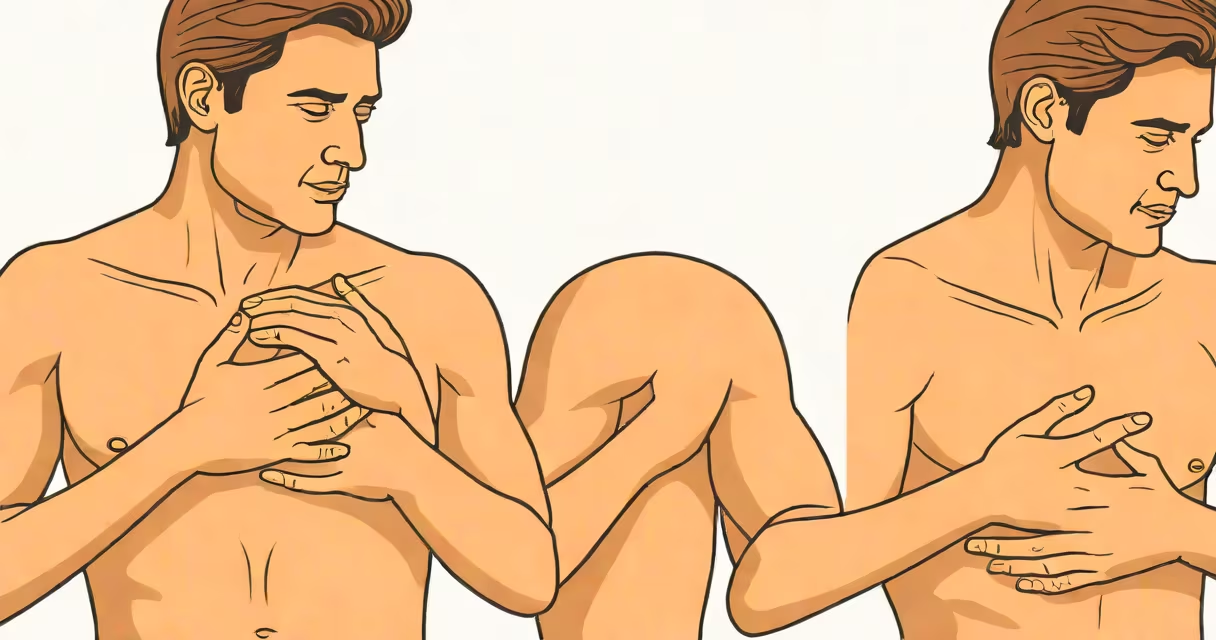
Chest discomfort on the left side may arise from heart conditions, lung disorders, gastrointestinal issues, or musculoskeletal strain. While some causes are life-threatening, many result from benign, treatable conditions.
Left-sided chest discomfort often involves pain, pressure, tightness, or aching localized to the left chest wall, beneath the breastbone, or radiating into the arm, neck, or jaw. The sensation can be sharp, dull, burning, or fluttering. Its origin depends on underlying anatomy and physiology.
Heart-related causes include acute coronary syndrome (heart attack), unstable angina, and pericarditis. Lung-related issues such as pleuritis, pulmonary embolism, or pneumothorax can mimic cardiac pain. Gastrointestinal origins like acid reflux (GERD), esophageal spasm, or hiatal hernia may cause burning or pressure-like sensations. Musculoskeletal factors-such as costochondritis, rib injuries, or muscle strain-commonly produce sharp, localized pain worsened by movement or deep breathing.
Pain signals originate when nerve endings in tissues detect injury, inflammation, or ischemia. In the chest, nociceptors in the heart, lungs, esophagus, and chest wall send signals via spinal nerves to the brain. Because these pathways converge in the spinal cord, pain from different organs can feel similar or even refer to the same area.
For example, pain from a blocked coronary artery may radiate to the left shoulder or jaw due to shared neural pathways. Similarly, irritation of the diaphragm from a stomach ulcer can be felt as left upper quadrant or left chest pain.
A 2021 study in Journal of the American College of Cardiology found that 42% of patients presenting with left-sided chest pain had non-cardiac causes, including GERD (18%), musculoskeletal issues (15%), and anxiety (9%). This underscores the importance of clinical evaluation to distinguish between urgent and non-urgent etiologies.
The following table outlines the most frequent causes of left-sided chest discomfort, their typical characteristics, and associated risk factors.
| Category | Specific Cause | Typical Sensation | Triggers or Patterns | Risk Factors |
|---|---|---|---|---|
| Cardiac | Acute coronary syndrome | Crushing, squeezing pressure | At rest or during exertion; lasts >10 minutes | Age >45, hypertension, diabetes, smoking |
| Lung | Pulmonary embolism | Sudden sharp pain, worse with breath | Develops rapidly; may include shortness of breath | Recent surgery, immobility, oral contraceptives |
| Gastrointestinal | GERD | Burning, retrosternal ache | After eating, lying down, bending forward | Obesity, large meals, alcohol, caffeine |
| Musculoskeletal | Costochondritis | Sharp, localized tenderness | Pain with palpation or movement | Repetitive motion, trauma, viral illness |
| Psychological | Anxiety or panic attacks | Fluttering, tightness, sharp pain | Occurs suddenly; often with hyperventilation | History of mental health conditions |
One non-obvious distinction: musculoskeletal pain typically worsens with specific movements-like twisting the torso or raising the arms-while cardiac pain rarely changes with position. A patient with costochondritis may report sharp pain when coughing or turning in bed, whereas someone experiencing a myocardial infarction usually describes persistent pressure unrelieved by posture changes.
Many people assume left-sided chest pain equals a heart attack. That belief leads to unnecessary emergency visits. According to the American Heart Association, only 15% of emergency department evaluations for chest pain result in a diagnosis of acute coronary syndrome.
Non-cardiac causes are far more common. For example, a 2020 study in Annals of Internal Medicine showed that among adults aged 30-60 with left-sided chest pain, 68% had no evidence of obstructive coronary disease on angiography. Of those, 41% were diagnosed with GERD, 22% with musculoskeletal pain, and 14% with anxiety-related symptoms.
I once evaluated a 34-year-old woman who reported episodic left chest tightness lasting 5-10 minutes, occurring while sitting at her desk. She described the pain as "like a band around my chest." Initial ECG was normal. After ruling out cardiac causes with a stress test, she was diagnosed with costochondritis. Her symptoms resolved within two weeks using NSAIDs and activity modification.
Not all left-sided chest discomfort requires immediate attention. However, certain signs indicate a medical emergency:
If any of these occur, call emergency services immediately. Delaying treatment for a heart attack increases mortality risk.
causes of chest discomfort left side span a wide spectrum-from harmless muscle strain to life-threatening events. Accurate identification relies on symptom pattern, duration, triggers, and clinical testing. Never ignore new or changing chest pain. Early assessment reduces complications and improves outcomes.