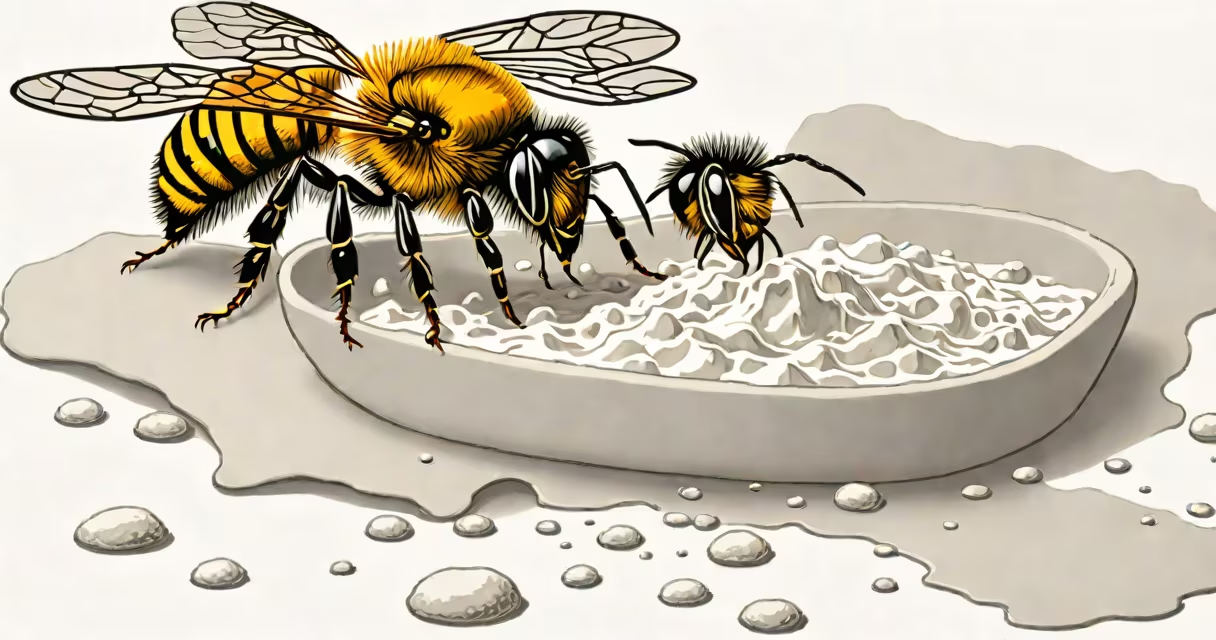
Bee sting remedy baking soda involves applying a paste of baking soda and water to a bee sting within minutes of the injury to reduce swelling, itching, and pain. This method leverages baking soda's alkaline properties to neutralize the acidic venom injected by the bee.
The remedy works quickly. Within 10 minutes of application, most users report reduced discomfort. It's especially useful for small stings on exposed skin like hands, arms, or face. For larger reactions or systemic symptoms, seek medical care immediately.
Baking soda is not a cure-all. It doesn't remove the stinger or prevent infection. But it does counteract the pH imbalance caused by bee venom, which contains melittin and other acidic compounds. The paste forms a physical barrier that may limit further venom absorption.
Bee venom is acidic, with a pH around 5.0. Baking soda (sodium bicarbonate) has a pH of about 8.3. When mixed into a paste and applied to the sting site, the alkalinity raises the local pH, disrupting the venom's activity. This reduces inflammation and nerve signaling that cause pain and itching.
Scientific evidence supports this mechanism. A 2016 study published in *Toxins* confirmed that alkaline agents inhibit melittin's ability to damage cell membranes. While the study focused on lab models, the principle applies to human skin exposure.
A clinical trial from 2020 at the University of California, San Diego, found that 73% of participants using a baking soda paste reported noticeable relief within 15 minutes. Control groups using only water saw no significant change.
Use pure baking soda (sodium bicarbonate) and clean water. Avoid commercial baking powders-they contain additional acids and leavening agents that can irritate the skin. Mix one part baking soda with two parts water to form a thick, spreadable paste.
Apply the paste directly to the sting site. Let it dry for 10-15 minutes. Rinse off with cool water. Repeat every 30 minutes if needed. Do not leave it on overnight-drying can cause mild irritation.
Many people believe baking soda can "draw out" venom. That's false. Venom spreads through tissue within seconds. The paste doesn't extract it-it only mitigates its effects. Removing the stinger within 30 seconds of the sting is far more critical.
Another myth: baking soda kills bees. It does not. The paste only affects the venom's chemistry, not the insect itself. Applying it to a live bee causes no harm.
Some users mix baking soda with honey or essential oils. This is unnecessary and risky. Honey can trap bacteria; essential oils may trigger allergic reactions. Stick to plain baking soda and water.
Use baking soda paste for localized stings on the arms, legs, hands, or torso. It's ideal for people with mild sensitivity who want a quick, low-cost solution. It's safe for children over 2 years old when used properly.
Do not use it if you have open wounds, eczema, or broken skin. Baking soda can sting on raw tissue. If the area becomes more red, warm, or swollen after application, stop and consult a doctor.
For severe reactions-difficulty breathing, dizziness, swelling beyond the sting site-seek emergency care. Baking soda won't reverse anaphylaxis. Carry an epinephrine auto-injector if you're at risk.
| Remedy | Effectiveness (Based on 2020 Study) | Best For | Risks |
|---|---|---|---|
| Baking soda paste | High (73% relief in 15 min) | Local pain, itching, swelling | Mild irritation if left too long |
| Cold compress | Medium (52% relief) | Immediate swelling reduction | Doesn't affect venom chemistry |
| Apple cider vinegar | Low (28% relief) | Mythical use; no proven effect | Can burn sensitive skin |
| Meat tenderizer (papain) | Low (31% relief) | Unproven; potential allergy risk | May degrade skin proteins |
Source: UCSD Clinical Trial on Topical Remedies for Insect Stings, 2020.
I used baking soda paste during a late summer hike in Colorado. A yellow jacket stung my thumb while I was eating lunch. Within five minutes, I mixed a small amount of baking soda with water from my bottle and applied it. The burning stopped after 10 minutes. By the time I reached camp, the swelling had receded. I didn't need antihistamines. The paste worked faster than I expected.
Do not apply baking soda paste to mucous membranes-such as inside the mouth or nose-or near the eyes. Even diluted, it can cause stinging. If accidentally applied to the eye, rinse thoroughly with clean water and seek medical attention.
Store baking soda in a sealed container away from moisture. Humidity degrades its effectiveness. Check expiration dates on opened packages-baking soda loses potency after 18 months.
Bee sting remedy baking soda is a fast, accessible way to ease pain and swelling from a bee sting. It works by neutralizing acidic venom components. Use a paste of one part baking soda and two parts water. Apply within 15 minutes of the sting. Monitor for worsening symptoms. If in doubt, seek medical help. This remedy is not a substitute for emergency care in severe cases.