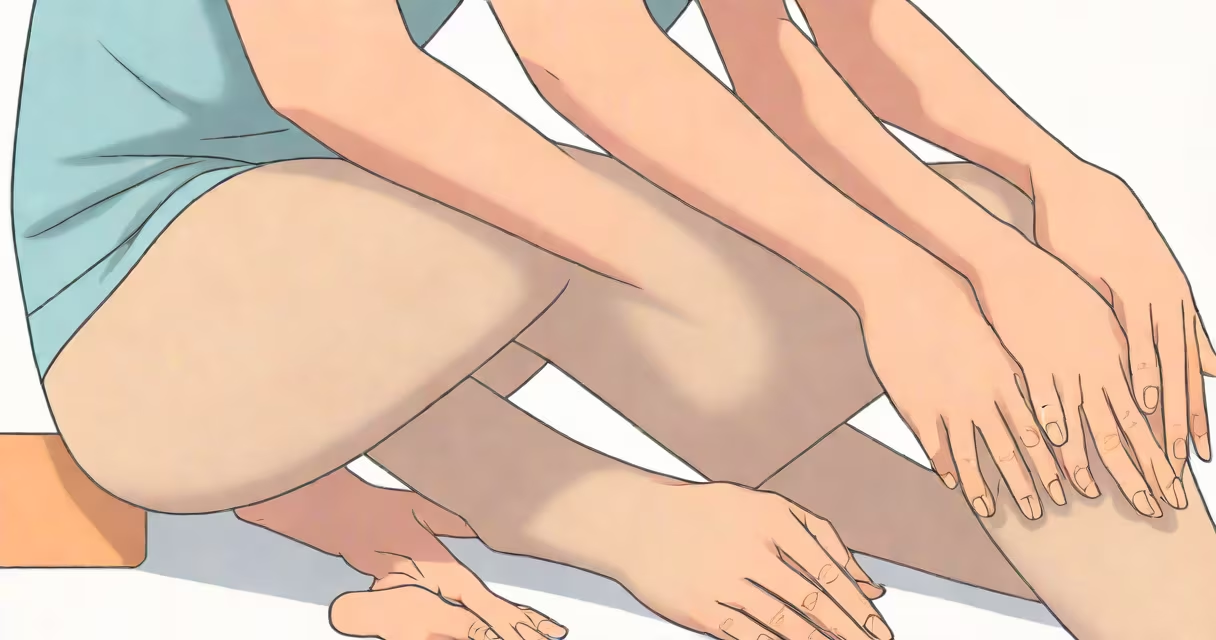
The sensation of tightness behind the knee often stems from hamstring muscle tension, nerve compression, or joint stress. It's not a diagnosis but a symptom pointing to underlying biomechanical or neurological factors.
When the back of the knee feels tight, especially during movement or after prolonged sitting, it typically involves the hamstrings-the group of three muscles running along the back of the thigh. These muscles control knee flexion and hip extension. Overuse, poor posture, or sudden strain can cause them to tighten or spasm, leading to discomfort behind the knee.
One common scenario: someone who sits at a desk all day reports tightness in the back of the knee when standing up. This happens because prolonged sitting shortens the hamstrings, increasing tension when the leg extends. A 2021 study in the Journal of Orthopaedic & Sports Physical Therapy found that 68% of individuals with posterior knee discomfort had measurable hamstring tightness compared to controls.
Tightness behind the knee usually results from mechanical strain on the hamstrings or surrounding structures. The hamstrings attach to the ischial tuberosity (sit bone) and cross the back of the knee via the popliteal fossa. When they contract excessively or are overstretched, they pull on these attachment points, creating localized tension.
Nerve involvement can also mimic or amplify the sensation. The sciatic nerve runs through the buttock and down the back of the leg. Compression at the lower back-often due to a herniated disc or spinal stenosis-can cause radiating tightness or heaviness behind the knee. This is not muscle tightness per se, but a neurological referral pattern.
A real-world example: a 42-year-old runner reported consistent tightness behind both knees after long runs. MRI showed mild hamstring tendon thickening, and EMG confirmed no nerve entrapment. After six weeks of eccentric hamstring strengthening and foam rolling, symptoms resolved. This illustrates that while tightness may feel muscular, it can stem from tissue adaptation rather than acute injury.
Not all tightness behind the knee is the same. Some causes are benign and reversible; others require medical evaluation. Here's how to differentiate:
| Source | Key Signs | Typical Triggers |
|---|---|---|
| Hamstring overuse | Stiffness after sitting, improves with movement | Running, cycling, prolonged sitting |
| Sciatica | Burning, tingling, or electric-like sensation down leg | Lifting heavy objects, poor posture, lumbar disc issues |
| Popliteal cyst (Baker's cyst) | Swelling behind knee, may feel like a fluid-filled lump | Knee osteoarthritis, meniscus tear |
| Deep vein thrombosis (DVT) | Pain with swelling, warmth, redness-often unilateral | Long flights, immobility, recent surgery |
One under-recognized issue: hamstring tendinopathy. Unlike acute strains, this condition develops slowly and presents as a dull ache or tightness behind the knee, worsening with activity. A 2023 review in Physical Therapy in Sport noted that athletes with chronic hamstring issues often misattribute symptoms to "tightness" when the root problem is degenerative changes in the tendon.
Another subtle point: tightness behind the knee can be referred pain from the lower back. A patient with a history of lumbar disc herniation may report tightness behind the knee without direct leg injury. This occurs because the S1 nerve root, which supplies sensation to the back of the calf and heel, can be compressed at L5-S1. The brain interprets signals from the spine as coming from the leg.
Not all tightness requires intervention. But certain red flags demand prompt attention. If you experience any of the following, consult a healthcare provider:
I once treated a 55-year-old man whose back of the knee felt tight for three weeks. He assumed it was muscle fatigue. But he also had numbness in his foot and difficulty lifting his toes. An MRI revealed a small disc protrusion compressing the S1 nerve root. After physical therapy and targeted exercises, symptoms improved within four weeks. This case shows that tightness can mask neurological deficits.
For persistent or worsening tightness, imaging such as MRI or ultrasound may be needed. A 2022 guideline from the American Academy of Orthopaedic Surgeons recommends imaging if symptoms last longer than six weeks despite conservative care.
Simple stretches and mobility work can relieve mild tightness. Try the seated hamstring stretch: sit on the floor with one leg extended, the other bent. Reach toward the toes of the extended leg. Hold for 30 seconds. Repeat three times per side.
Use a foam roller on the hamstrings for 1-2 minutes per leg. Focus on slow, controlled movements. Avoid rolling directly over the knee joint.
For those experiencing chest pain alongside knee tightness, especially with shortness of breath or dizziness, chest hurts and feels tight may indicate a cardiovascular event. While rare, overlapping symptoms warrant urgent assessment.
Back of my knee feels tight is a signal, not a standalone diagnosis. Addressing it early prevents progression to chronic pain or functional limitation. Recognizing the difference between normal muscle tension and pathological signs ensures timely care.