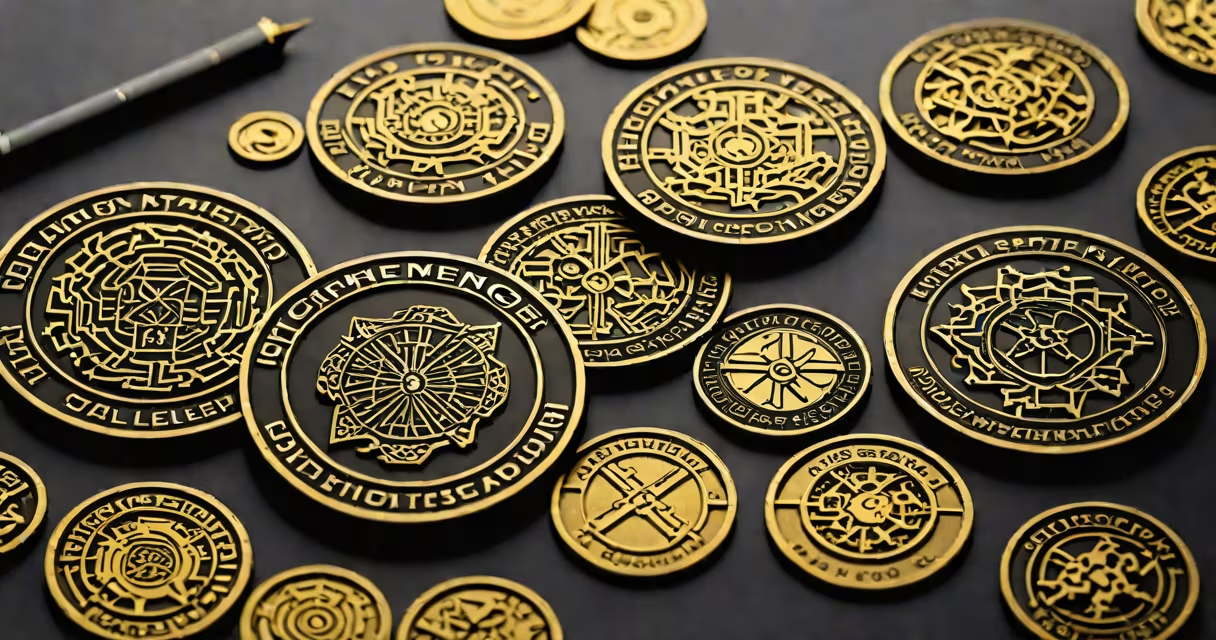
Challenge coins are small, typically round metal tokens with engravings on both sides, traditionally used by military units, law enforcement agencies, fraternities, and corporate teams to signify membership, commemorate events, or recognize accomplishments. They serve as tangible symbols of identity, loyalty, and shared experience.
The practice originated in the U.S. Army during World War I, when soldiers carried metal medallions for good luck. By the Vietnam War, the tradition evolved into a formalized ritual: if a member was challenged to produce their coin, failure to do so meant buying a round of drinks. This tradition persists today in military and civilian circles alike.
Modern challenge coins are crafted from brass, bronze, or nickel-plated steel, often featuring raised relief designs, colored enamel fills, and custom finishes. They range from 1.25 inches to 2.5 inches in diameter and may include embossed edges or textured surfaces for tactile recognition.
When someone challenges another to produce their coin, the person must have it on their person. If they fail, they pay for a drink or perform a task. This ritual reinforces group cohesion and personal accountability. The challenge is not about punishment-it's about belonging.
Each coin design tells a story. A unit's crest, mission patch, or date of formation might appear on one side. The reverse often includes a motto, slogan, or symbol representing the group's values. For example, a Navy SEAL team might feature a shark's tooth and the phrase "Never Leave a Brother Behind."
Some organizations use challenge coins in ceremonies. During a deployment farewell, a commander might hand out coins to each service member. The act marks the transition from training to operational duty. These moments are emotionally charged-wearing the coin becomes a daily reminder of purpose.
Challenge coins come in several forms based on use, design complexity, and material. The most common types are:
| Type | Material | Use Case | Cost Range |
|---|---|---|---|
| Standard Enamel | Brass with colored enamel fill | Military units, police departments | $10-$20 |
| Die-Struck Relief | Nickel-plated steel or bronze | Ceremonial awards, corporate events | $25-$50 |
| Multi-Layered | Brass with multiple metal layers | High-end commemoratives, collector pieces | $60-$150+ |
| Custom Shape | Any metal with unique cutouts | Themed events, brand promotions | $30-$100 |
Enamel-filled coins are the most popular due to durability and visual impact. The enamel is poured into recessed areas and fired at high heat to bond permanently. This process prevents chipping and fading over time.
A lesser-known fact: many challenge coins are made using a technique called "die-struck" stamping. A single metal blank is placed between two dies-one for each side-and struck under 100 tons of pressure. This creates sharp detail and consistent depth, unlike hand-carved or cast versions.
While rooted in military culture, challenge coins now appear in schools, sports teams, tech startups, and nonprofit groups. A university fraternity might give a coin to new initiates. A software company could hand them out at a product launch to employees who contributed to the beta release.
One example: in 2019, a cybersecurity firm in Austin gave custom challenge coins to staff who completed a 72-hour incident response drill. The coin bore the company logo, a shield with a digital lock icon, and the words "Stay Sharp." Employees wore them on lanyards during meetings-a visible sign of readiness.
Another use is fundraising. Nonprofits sell limited-edition coins to donors. The 2021 "Veterans' Voices" campaign by the Wounded Warrior Project sold 5,000 coins with portraits of disabled veterans. Proceeds funded mental health services. Each coin included a QR code linking to the recipient's story.
Despite widespread adoption, challenge coins are sometimes misunderstood. Some assume they're purely decorative or expensive collectibles. But their value lies in function-not aesthetics. A coin is not a trophy; it's a tool for connection.
Many people think challenge coins are only for the military. That's incorrect. While the tradition began in the armed forces, the practice is now used across sectors. Police departments issue them during academy graduations. Fire stations distribute them to new recruits. Even high school robotics teams use them to mark competition wins.
Another myth: all challenge coins are gold or silver. Not true. Most are brass with a gold or silver finish. Bronze is used for historical or artistic pieces. Some companies use black oxide or matte finishes for a modern look.
There's also confusion around authenticity. Counterfeit coins exist-especially online. A genuine challenge coin has precise alignment between front and back designs. Misaligned images or blurry text suggest a low-quality reproduction. Always verify the manufacturer's credentials.
I once attended a veteran's reunion where a man pulled out his 1989 Marine Corps coin. The edge was worn from years of carrying it in a pocket. He said, "I've dropped it in mud, stepped on it, left it in a car in winter. It still holds up. That's what matters." His coin wasn't valuable because of its metal-it was valuable because of what it represented.
To make a custom challenge coin, start with a clear concept: who is it for, what event does it commemorate, and what message should it convey? Design elements should reflect the group's identity-colors, symbols, slogans.
Use vector-based software like Adobe Illustrator or free tools such as Inkscape to create a high-resolution artwork. Include bleed lines (at least 0.125 inches beyond the edge) to prevent trimming errors. Submit the file to a reputable manufacturer with a portfolio of past work.
For example, a local fire department planning a 25th anniversary event chose a design showing a firefighter's helmet with flames forming a heart. The front read "25 Years of Service - We Stand Together." The back listed the names of fallen members. The final cost was $18 per coin for 100 units.
Manufacturers offer proof samples before mass production. Review them carefully. Check for alignment, color accuracy, and edge quality. Once approved, production takes 3-5 weeks.
Challenge coins are more than metal tokens. They are physical expressions of community, resilience, and shared purpose. Whether issued after a mission, awarded for leadership, or gifted at a milestone, they carry weight far beyond their size.