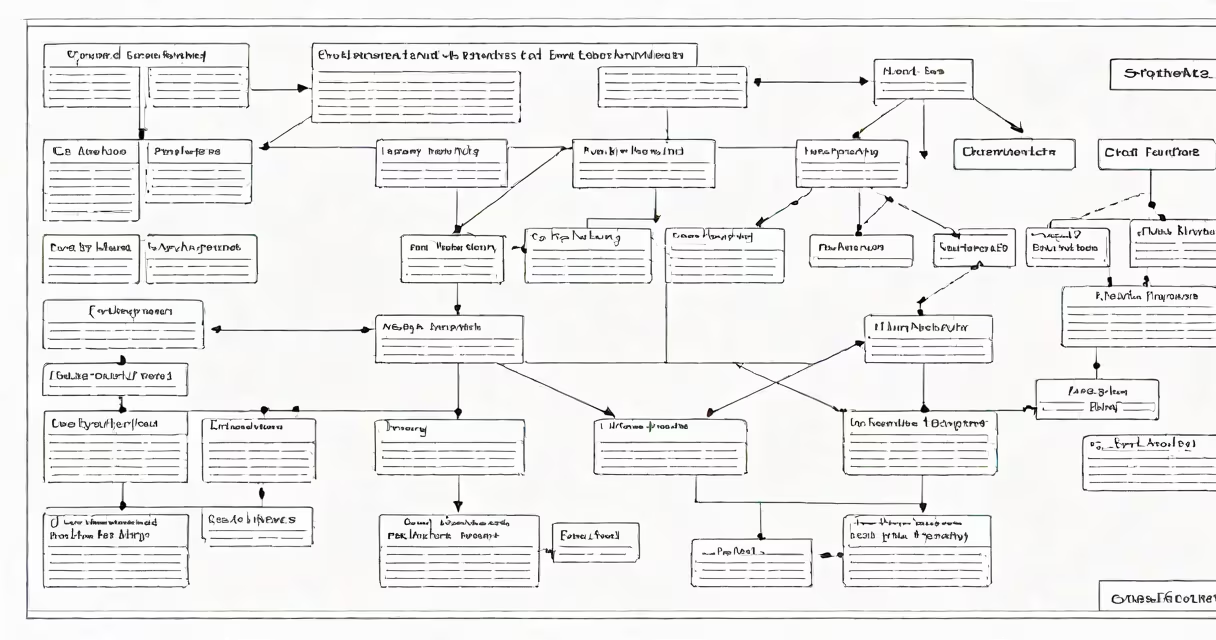
The definition of organizational structure refers to the formal arrangement of roles, responsibilities, reporting relationships, and communication channels within a company. It determines how tasks are divided, coordinated, and managed to achieve strategic goals. This structure shapes decision-making flow, defines authority levels, and influences team interaction across departments.
Organizational structure is not a single model-it adapts based on company size, industry, culture, and strategic objectives. A small startup may operate with minimal hierarchy, while a multinational corporation uses complex layers of management. The structure affects everything from employee productivity to response speed during crises.
Understanding the definition of organizational structure begins with recognizing its foundational purpose: to create clarity in who does what, who reports to whom, and how information moves through the system. Without it, coordination fails, duplication occurs, and accountability erodes.
At its core, organizational structure functions through defined chains of command and task distribution. Employees are assigned roles based on expertise, experience, and departmental needs. These roles connect through formal reporting lines-typically visualized in an org chart-that show direct supervisors and subordinates.
Decision-making follows these lines. For example, in a hierarchical structure, a project manager may approve a budget request, but final approval rests with the finance director. This ensures consistency and reduces conflicting directives. Communication flows both upward (reports) and downward (instructions), often via meetings, emails, or internal platforms.
When structure is poorly designed, bottlenecks emerge. A 2022 McKinsey report found that companies with unclear reporting lines experienced 30% slower project completion rates compared to those with well-defined hierarchies. Clarity in structure directly impacts operational efficiency.
Organizations adopt different structural models based on their goals and environment. The most common types include functional, divisional, flat, matrix, and network structures. Each serves distinct purposes and carries unique trade-offs.
| Type | Best For | Reporting Lines | Example |
|---|---|---|---|
| Functional | Specialized teams, consistent processes | Single chain: CEO → Department Heads → Staff | Large manufacturing firms like General Electric |
| Divisional | Geographic or product-based operations | Multiple parallel chains by region or product line | Procter & Gamble's divisions for Tide, Gillette, and Oral-B |
| Flat | Startups, agile environments | Few or no middle managers | Early-stage tech startups like Airbnb in 2010 |
| Matrix | Projects requiring cross-functional collaboration | Dual reporting: project manager and functional manager | Engineering teams at SpaceX managing multiple missions |
| Network | Outsourced operations, flexible staffing | External partners linked via contracts | Netflix's production model relying on independent studios |
Each model reflects a different balance between control and flexibility. Functional structures prioritize efficiency and standardization. Divisional models allow autonomy in diverse markets. Flat structures accelerate decisions but risk role ambiguity. Matrix systems enable changing resource allocation but can cause confusion over authority.
Every organization-from nonprofits to global enterprises-uses some form of organizational structure to manage complexity. It enables scalability, ensures compliance, and supports performance tracking.
In healthcare, hospitals use functional structures to assign doctors, nurses, and administrators to specific units (e.g., cardiology, emergency care). This minimizes errors and streamlines patient care. In contrast, a software development firm may use a flat or matrix structure to promote rapid iteration and innovation.
A real-world example: when Apple expanded into wearables, it adopted a hybrid structure. Product teams reported to both the hardware division and the innovation lab. This dual alignment helped integrate design, engineering, and marketing quickly-critical for launching the Apple Watch in 2015.
Nonprofits also rely on structure. The American Red Cross uses a regional divisional model to coordinate disaster response across states. Each state chapter operates semi-independently under national guidelines, enabling fast local action while maintaining brand consistency.
Many people mistake organizational structure for company culture or job titles. The definition of organizational structure is not about values, work ethic, or employee satisfaction. It's about formal systems of authority and workflow.
Another misconception: that structure is static. In reality, organizations frequently restructure. After the 2008 financial crisis, JPMorgan Chase reorganized its investment banking division into smaller, specialized units to improve oversight and reduce risk exposure. This change wasn't cosmetic-it altered reporting lines, executive roles, and performance metrics.
Even the term "flat" is misunderstood. A flat structure doesn't mean no hierarchy-it means fewer management layers. There's still a leader, but the span of control is wider. A 2021 Harvard Business Review study showed that flat organizations with 100+ employees often develop informal hierarchies over time, leading to power imbalances unless carefully monitored.
One non-obvious insight: structure impacts employee retention. A 2023 Gallup survey found that employees in structured organizations were 45% less likely to leave within the first year than those in ambiguous setups. Clarity in reporting lines reduces stress and improves engagement.
Consider a mid-sized e-commerce company launching a new product line. The founder initially runs everything-design, sourcing, marketing, sales. As orders grow, chaos emerges: delays in shipping, misaligned messaging, duplicated efforts.
To fix this, they implement a functional structure:
This setup clarifies who approves budgets, who handles delivery timelines, and who responds to customer complaints. After six months, order accuracy improved by 62%, and customer satisfaction scores rose from 74% to 89%.
Without defining the organizational structure, the company would have continued operating in reactive mode. The structure enabled proactive planning, resource allocation, and accountability.
The definition of organizational structure is not a theoretical concept-it's a practical tool for building effective, resilient organizations. Its correct implementation separates high-performing teams from those struggling with inefficiency and confusion.