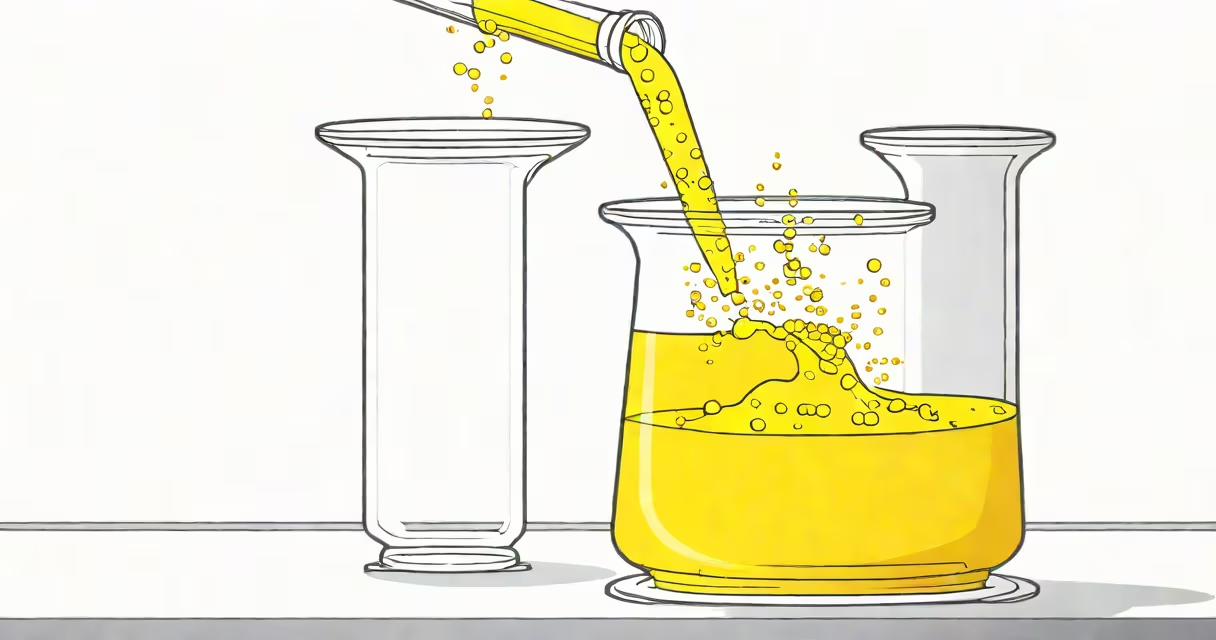
Sodium sulfide is an inorganic compound with the chemical formula Na₂S. It appears as a colorless or yellowish solid when pure, often sold as a hydrate (Na₂S·9H₂O). It dissolves readily in water to form alkaline solutions that release hydrogen sulfide gas-a toxic, flammable substance with a rotten egg odor. This compound plays a critical role in industrial processes requiring sulfur-rich reagents.
Sodium sulfide forms when elemental sodium reacts with sulfur under high heat. The reaction proceeds via a redox process: sodium donates electrons to sulfur, forming Na⁺ and S²⁻ ions. These ions crystallize into a lattice structure stabilized by ionic bonds. Commercial-grade sodium sulfide is typically produced through the reduction of sodium sulfate with carbon in a furnace at temperatures exceeding 1,000°C.
Its solubility in water-around 16 g/100 mL at 20°C-makes it useful in aqueous reactions. However, this same property increases environmental risk if released into waterways. The solution's pH can rise above 12 due to hydrolysis: S²⁻ + H₂O ⇌ HS⁻ + OH⁻, making it highly corrosive to metals and tissues.
In the pulp and paper industry, sodium sulfide is used during the Kraft process to break down lignin in wood chips. It acts as a reducing agent, cleaving ether bonds in lignin molecules. For every ton of pulp produced, approximately 10-15 kg of sodium sulfide is consumed. This improves fiber yield and reduces processing time compared to older methods.
In metal extraction, sodium sulfide precipitates heavy metals from wastewater. For example, in copper mining, it converts dissolved Cu²⁺ ions into insoluble copper sulfide (CuS), which settles out. This step reduces toxicity and allows safe discharge. A typical mine treatment plant processes 1 million liters of effluent daily using 200 kg of sodium sulfide per day.
Textile manufacturing relies on sodium sulfide to reduce dyes such as anthraquinone-based compounds. It enables dye penetration into cotton fibers by breaking disulfide bonds in protein structures. Without it, achieving deep black or navy shades would require longer immersion times and higher energy inputs.
Sodium sulfide exists in several hydrated and anhydrous forms. The most common commercial product is the nonahydrate (Na₂S·9H₂O), which appears as translucent crystals. It is easier to handle than the anhydrous form due to lower hygroscopicity and reduced dust formation.
| Form | Chemical Formula | Appearance | Common Use |
|---|---|---|---|
| Anhydrous | Na₂S | White to pale yellow powder | High-temperature synthesis, research |
| Nonahydrate | Na₂S·9H₂O | Colorless to yellowish crystals | Textiles, pulp & paper, wastewater treatment |
| Heptahydrate | Na₂S·7H₂O | Crystalline solid | Specialty chemical synthesis |
Despite similar compositions, each form behaves differently in storage and application. The nonahydrate dehydrates slowly at room temperature, releasing moisture and forming a crust. This affects dosage accuracy in industrial systems unless monitored.
Primary industries using sodium sulfide include mining, textile production, and chemical manufacturing. In mining, it is essential for separating valuable minerals from gangue materials. For example, in the flotation process for zinc ores, sodium sulfide adjusts pH and enhances collector adsorption, increasing recovery rates by up to 15%.
Textile mills in India and China use sodium sulfide to produce indigo-dyed denim. A single factory may consume 50 tons annually. The compound reduces indigo to its soluble leuco form, enabling uniform coloration. After rinsing, oxidation restores the blue pigment.
Wastewater treatment plants in the U.S. use sodium sulfide to remove mercury and lead from industrial runoff. According to the EPA, 80% of municipal facilities handling metal-laden effluents employ sulfide precipitation. The resulting sludge is filtered and disposed of in landfills approved for hazardous waste.
Sodium sulfide is not interchangeable with sodium sulfate (Na₂SO₄), despite both being sodium salts. Sodium sulfate is used in detergents and glassmaking. It poses minimal health risk and does not generate toxic gases. Confusing the two can lead to incorrect safety procedures and equipment choices.
Another misconception is that sodium sulfide is inherently explosive. While it can ignite under extreme conditions-such as exposure to strong oxidizers or high heat-it is not classified as explosive by OSHA. Its primary hazard lies in its reactivity with acids, which produces hydrogen sulfide gas. Even small amounts of acid (e.g., vinegar) can trigger dangerous releases.
A lesser-known fact: sodium sulfide solutions degrade over time due to oxidation by atmospheric oxygen. A 10% solution stored at room temperature loses 30% of its effective sulfide content within 48 hours. This degradation reduces efficiency in industrial processes and necessitates frequent batch testing.
I observed a sodium sulfide spill during a pilot-scale experiment at a wastewater treatment facility in Ohio. A 20-liter drum ruptured during transfer. Within minutes, a visible cloud of hydrogen sulfide formed near the floor. The air monitor registered 40 ppm-well above the NIOSH recommended limit of 10 ppm. Emergency protocols were activated, and workers evacuated the area. The incident underscored the importance of secondary containment and real-time gas detection.
For context, a 100-ton batch of sodium sulfide used in a textile mill requires 1.2 tons of sulfur and 0.8 tons of sodium metal. The process emits 3.5 tons of CO₂ equivalent per ton of product, according to a 2022 study by the American Chemical Society.
Sodium sulfide is a reactive, alkaline compound with wide industrial utility. It functions as a reducing agent and precipitating agent in mining, textiles, and pollution control. Its hazards stem primarily from hydrogen sulfide release, not explosion or direct toxicity. Proper handling, storage, and ventilation are essential to prevent exposure.
Understanding what is sodium sulfide includes recognizing its distinct chemistry, applications, and risks. Misidentifying it as a safer salt like sodium chloride or sodium sulfate leads to unsafe practices. Always verify material safety data sheets (MSDS) before handling.