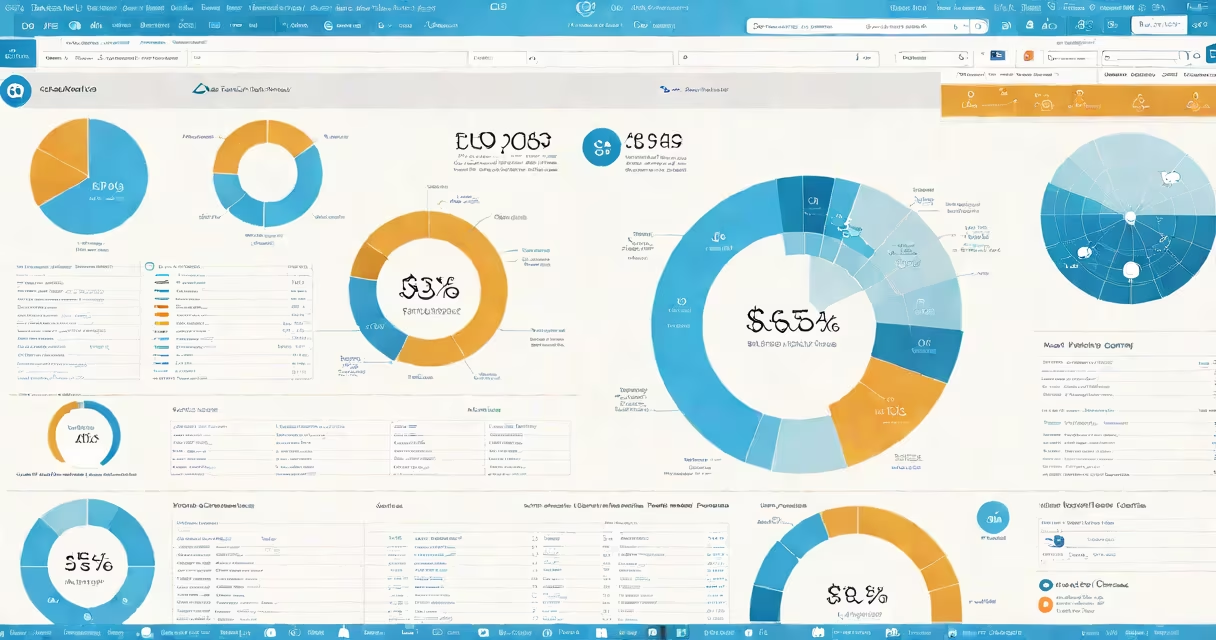
Salesforce is known for being the dominant cloud-based customer relationship management (CRM) platform, enabling organizations to manage sales pipelines, customer service interactions, marketing campaigns, and e-commerce operations through integrated, AI-powered tools.
At its core, Salesforce centralizes customer data across departments-sales, marketing, service, and commerce-allowing teams to track interactions, forecast revenue, and deliver personalized experiences at scale. Founded in 1999, it was among the first companies to offer enterprise software as a subscription service, pioneering the SaaS (software-as-a-service) model.
The platform's architecture supports extensive customization via Salesforce Lightning, a low-code development environment, and AppExchange, a marketplace of third-party apps and integrations. Over 200,000 apps are available on AppExchange, extending functionality into HR, finance, supply chain, and industry-specific workflows.
Salesforce operates entirely in the cloud, accessible via web browsers or mobile apps. Data is stored on distributed servers managed by Salesforce, ensuring high availability and automatic updates. Users interact with dashboards, reports, and automated workflows tailored to their roles.
For example, a sales rep logs a call with a prospect in Salesforce. The system automatically updates the opportunity stage, triggers a follow-up email via Marketing Cloud, and assigns a task to the account executive. This happens in real time across devices and teams.
Behind the scenes, Salesforce uses relational databases and APIs to connect data between modules. When a support ticket is created, it pulls customer history from Sales Cloud, checks product documentation in Service Cloud, and routes the issue based on predefined rules. All actions are logged for audit trails and compliance.
Salesforce offers several interconnected products, each focused on a business function:
| Product | Primary Function | Example Use Case |
|---|---|---|
| Sales Cloud | Manages sales pipelines, forecasts, and deal tracking | A tech company tracks 150+ monthly sales opportunities using lead scoring and automated reminders. |
| Service Cloud | Handles customer support tickets, live chat, and knowledge bases | An e-commerce brand resolves 90% of Tier 1 support queries within 15 minutes using AI-powered routing. |
| Marketing Cloud | Executes targeted email, social media, and campaign analytics | A retail chain sends personalized discount offers based on past purchase behavior and browsing history. |
| Commerce Cloud | Manages online storefronts, inventory, and checkout flows | A luxury fashion brand runs a seasonal sale with changing pricing and real-time stock updates across 12 countries. |
These systems integrate through a shared database and common user interface. A single customer record can include contact details, recent purchases, support history, and upcoming renewal dates-all visible in one view.
Over 150,000 organizations globally use Salesforce, including Fortune 500 companies like Amazon, Netflix, and Unilever. Its adoption spans healthcare, education, government, manufacturing, and financial services.
For instance, a hospital system uses Salesforce Health Cloud to coordinate patient care. When a patient schedules a follow-up appointment, the system alerts the primary care provider, checks insurance eligibility, and sends a reminder via SMS. This reduces missed appointments by 37%, according to a 2022 study by Salesforce Research.
Another example: a global bank deployed Salesforce to unify customer data across branches. Before implementation, account managers had to switch between five legacy systems. After migration, they accessed complete client profiles-including credit scores, transaction history, and loan applications-in under 10 seconds.
Salesforce is often mistaken as a simple sales tool. In reality, it's a full-stack digital operating system for customer-facing functions. It's not limited to sales teams-it supports marketing, IT, HR, and executive leadership.
Some assume Salesforce requires massive IT infrastructure. The opposite is true: it's designed for minimal on-premise setup. Most configurations are done through point-and-click interfaces, reducing dependency on developers.
A lesser-known fact: Salesforce processes over 10 trillion transactions annually across its platforms. That volume supports real-time decision-making-for example, adjusting ad bids in real time based on user engagement patterns.
I once helped a mid-sized SaaS company migrate from spreadsheets and email to Salesforce. Their sales team spent 6 hours weekly manually updating deal statuses. After implementing Sales Cloud with custom fields and automated workflows, that dropped to 45 minutes.
They set up a pipeline report showing win rates by region. The data revealed a 22% lower conversion rate in the Midwest. Upon investigation, the team discovered inconsistent follow-up timing. They standardized outreach templates and added calendar reminders. Within two quarters, Midwest close rates improved by 18 percentage points.
This outcome wasn't due to better tools-it was because the system made visibility and accountability possible. That's what Salesforce is known for: turning fragmented customer data into actionable insight.
Salesforce is known for transforming how organizations understand and engage with customers. Its strength lies not in any single feature, but in the integration of data, automation, and analytics across business functions-enabling growth, retention, and innovation at scale.