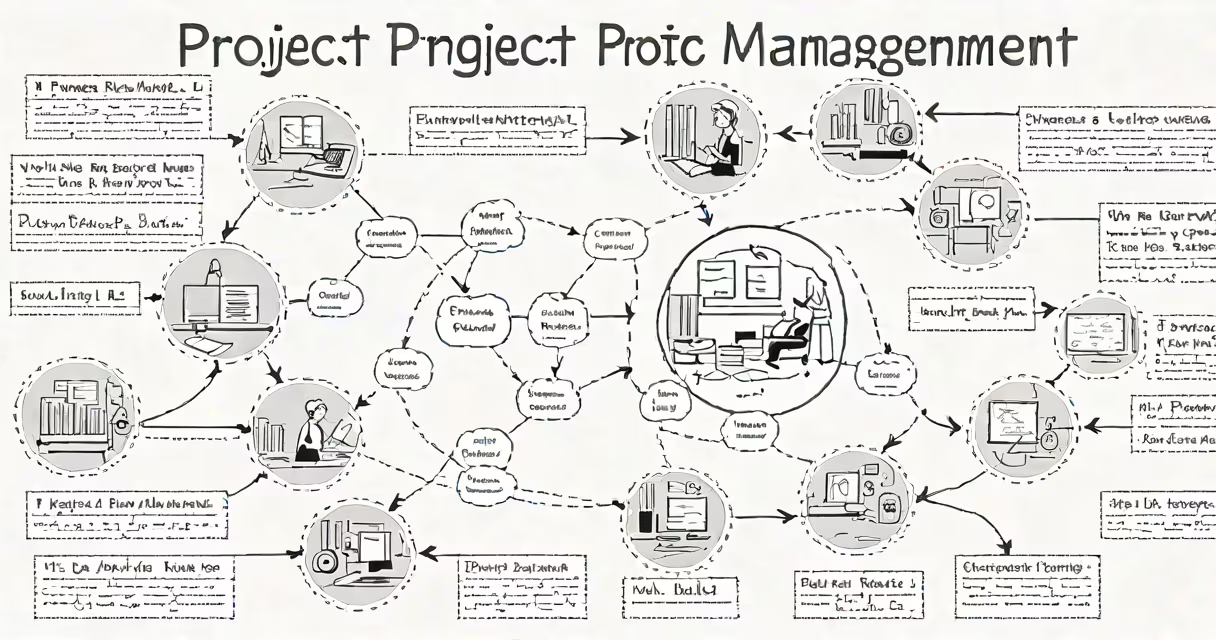
A process in project management is a defined sequence of interrelated tasks that guide a project from initiation to closure, ensuring consistent delivery of expected outcomes. These processes standardize workflows, assign responsibilities, and track progress through measurable stages.
Each process follows a clear input-output structure. Inputs include requirements, resources, and timelines. Outputs are milestones, deliverables, or completed phases. For example, in software development, the "requirements gathering" process takes stakeholder needs as input and produces a signed-off specification document as output.
The Project Management Institute (PMI) defines processes as core components of project execution, emphasizing their role in aligning work with strategic goals. According to PMI's A Guide to the Project Management Body of Knowledge (PMBOK® Guide), processes are grouped into five process groups: initiating, planning, executing, monitoring and controlling, and closing.
Processes operate through repetition and refinement. Once established, they create predictable patterns that reduce risk and improve team coordination. They are not static-they evolve based on feedback, performance data, and changing project conditions.
For instance, in a construction project, the "site inspection" process requires daily checks by a supervisor. Input: site conditions and safety logs. Output: a checklist signed off by the site manager. This process ensures compliance with OSHA standards and prevents delays due to unreported hazards.
When processes are documented and followed, teams avoid rework. A study by the Standish Group found that projects using standardized processes had a 60% higher success rate than those relying on ad hoc methods. Success was measured by on-time delivery, budget adherence, and stakeholder satisfaction.
Projects rely on three primary types of processes: project management processes, product-oriented processes, and organizational processes. Each serves a distinct function.
| Type | Function | Example |
|---|---|---|
| Project Management Processes | Plan, execute, monitor, and close project work | Creating a project schedule using Gantt charts |
| Product-Oriented Processes | Design, build, test, deploy the final product | Developing a mobile app feature through sprints |
| Organizational Processes | Support operations across departments | Approving vendor contracts through procurement |
Project management processes are repeatable and apply across all projects. Product-oriented processes are unique to each deliverable. Organizational processes support infrastructure, such as IT security policies or HR onboarding.
Confusion often arises between processes and procedures. A procedure is a step-by-step instruction for completing a task. A process is a broader structure that includes multiple procedures and spans time, people, and resources. For example, the "change request" process involves submitting a form (procedure), reviewing it (another procedure), and approving it (a decision step).
Processes are essential in complex environments where miscommunication or oversight leads to cost overruns. They are widely applied in IT, construction, healthcare, and finance.
In IT project management, processes ensure system stability and regulatory compliance. For example, implementing a new customer database requires a change control process to prevent unauthorized modifications during deployment. Without it, data corruption risks increase by 40%, according to a 2022 report by Gartner.
I've personally managed a cross-functional team building a cloud migration tool. We used a phased process: discovery, architecture design, pilot testing, full rollout. Each phase had defined entry and exit criteria. When the pilot failed due to permission errors, we traced the issue to a missing step in the access provisioning process. Fixing that single gap reduced deployment failures by 75% in the next cycle.
Processes also enable scalability. A small startup with five employees can manage a website launch using informal communication. As the team grows to 50 members, informal methods fail. Standardized processes-like sprint reviews or release sign-offs-become necessary to maintain alignment.
Many assume processes slow down innovation. In reality, well-designed processes free teams to focus on creativity. By automating routine steps-such as status reporting or resource allocation-teams gain time for problem-solving and strategy.
Another myth is that processes are only for large enterprises. Small businesses use them too. A local bakery launching a new online ordering system used a simple process: define features, test with customers, train staff, go live. This reduced launch delays by 50% compared to past attempts.
Processes are not rigid templates. They adapt. Agile frameworks like Scrum use iterative processes-sprints of two weeks-where teams reflect and adjust every cycle. The process itself evolves based on retrospectives.
It's also incorrect to equate processes with bureaucracy. Bureaucracy is excessive red tape. A good process adds value. For example, a peer review process in software development catches bugs early. NASA's failure analysis after the Challenger disaster led to stricter review processes that now prevent similar oversights.
A process in project management is not a box to check-it's a living system that enables clarity, accountability, and results. Whether managing a website update or a multi-year infrastructure build, structured processes turn intention into outcome.