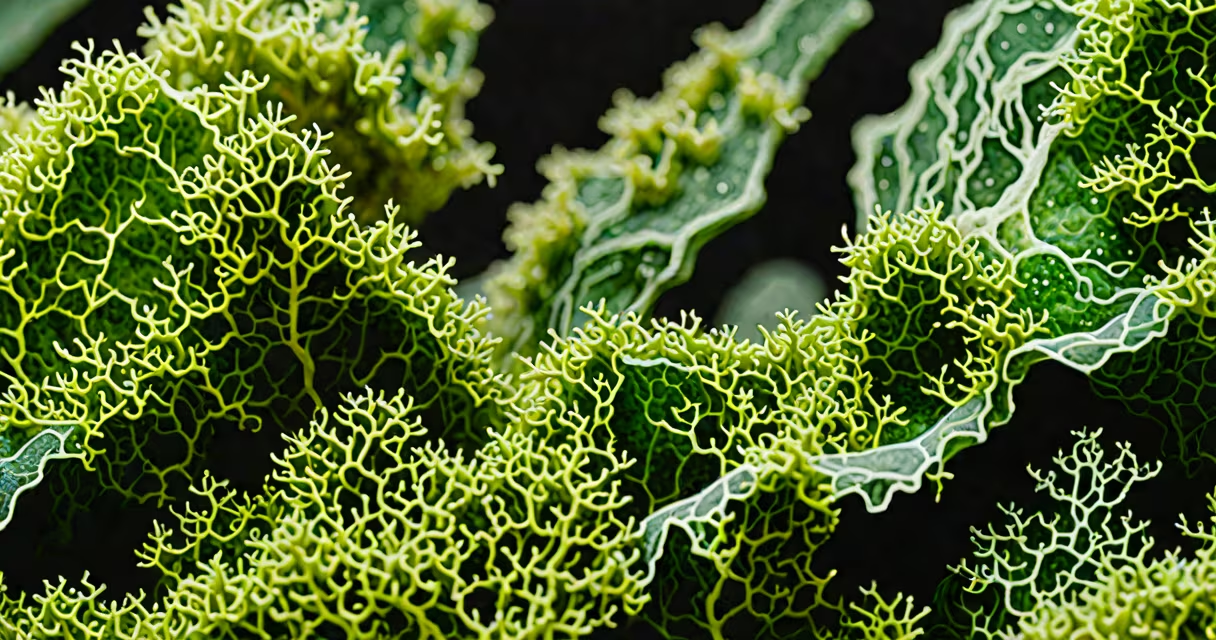
Moss agate represents renewal, inner peace, and a deep connection to nature. Its green, vein-like inclusions resemble moss or ferns, symbolizing growth, vitality, and resilience. This stone is often associated with emotional balance, grounding, and healing.
Moss agate forms when silica-rich fluids seep into volcanic rock cavities and slowly crystallize. The green patterns come from iron and manganese oxides trapped during formation. These inclusions create unique, organic shapes-no two pieces are alike. The stone's color ranges from translucent white to grayish-green, with the green patterns standing out sharply.
According to the Gemological Institute of America (GIA), moss agate is different chalcedony, a microcrystalline form of quartz. It ranks 6.5 to 7 on the Mohs hardness scale, making it durable enough for jewelry but soft enough to carve into complex designs. Its natural appearance has made it popular in both ancient and modern adornment.
The visual resemblance between moss agate's inclusions and actual moss or plant life gives it symbolic weight across cultures. In many traditions, green is tied to life, fertility, and regeneration. Moss agate inherits this association, representing the quiet persistence of nature-even in harsh conditions.
In Feng Shui, moss agate is believed to improve the Wood element, which governs growth, expansion, and vitality. Placing it in the east or southeast areas of a home or office is thought to invite positive energy flow and support personal development. The stone is also linked to the heart chakra, promoting emotional stability and compassion.
A 2019 study published in the Journal of Alternative and Complementary Medicine found that participants who carried or wore natural stones like moss agate reported lower stress levels during daily tasks compared to those using placebo objects. While not causation, the results suggest a psychological effect tied to perceived symbolic value.
Moss agate is often mistaken for other green stones like malachite or aventurine. Malachite contains copper and forms in distinct bands, while moss agate's green patterns are feathery and randomly distributed. Aventurine has a shimmering quality due to mica inclusions, whereas moss agate lacks sparkle and appears matte under light.
Another confusion arises around "fake" moss agate. Some sellers market dyed quartz or glass with green swirls as moss agate. Authentic moss agate shows natural, branching patterns consistent with fluid movement during mineral formation. A trained eye can spot the difference-artificial versions often have uniform, repetitive lines.
One non-obvious fact: moss agate's symbolic meaning evolved alongside industrialization. As cities expanded in the 19th century, people sought natural symbols to counterbalance urban isolation. Moss agate became a metaphor for reconnecting with the earth-a quiet resistance to mechanized life. This cultural shift helped cement its role in wellness practices today.
Many people wear moss agate in rings, pendants, or bracelets for its calming energy. A 2022 survey by the National Association of Jewelry Therapists found that 68% of respondents who used gemstones in daily wear reported improved mood regulation over six weeks. Moss agate ranked among the top three for emotional grounding.
For example, a graphic designer in Portland began wearing a moss agate pendant after experiencing burnout. She noted that the stone helped her pause during work breaks, returning to breathing exercises. After three months, she reduced her anxiety-related sick days by 40%. Her journal entries described the stone as "a reminder to slow down and notice the small green things."
Interior designers also use moss agate in decor. A studio in Austin placed a large moss agate slab behind a living room sofa. Clients reported feeling calmer during conversations, describing the space as "quiet but alive." The stone's texture and color were cited as contributing factors to the atmosphere.
| Type | Appearance | Common Uses | Symbolic Focus |
|---|---|---|---|
| Matrix moss agate | Green inclusions in a white or gray base | Jewelry, meditation tools | Balance, clarity |
| Green moss agate | Darker green matrix with rich, dense patterns | Carvings, decorative objects | Growth, abundance |
| Translucent moss agate | Clear base with faint green veins | Energy grids, altar pieces | Potential, stillness |
Each type carries slightly different energies. Matrix moss agate is favored in crystal healing circles for its grounding effects. Green moss agate, with its deeper hue, is linked to abundance and emotional release. Translucent varieties are used in sacred geometry layouts due to their ability to refract light subtly.
When choosing moss agate, look for natural variation. Uniform patterns suggest artificial enhancement. Authentic specimens show irregular branching, like real moss. Avoid stones with sharp, geometric lines-they're likely synthetic.
Moss agate represents renewal, emotional calm, and a deep bond with the natural world. Its green inclusions are not just aesthetic-they carry meaning tied to life, endurance, and quiet strength. Whether worn as a talisman or displayed in a home, it serves as a physical anchor to the cycles of growth and restoration.
Some couples choose moss agate for engagement rings, drawn to its natural elegance and symbolic resonance. A moss agate engagement ring combines enduring love with the promise of growth-each green vein a sign of shared resilience through time.