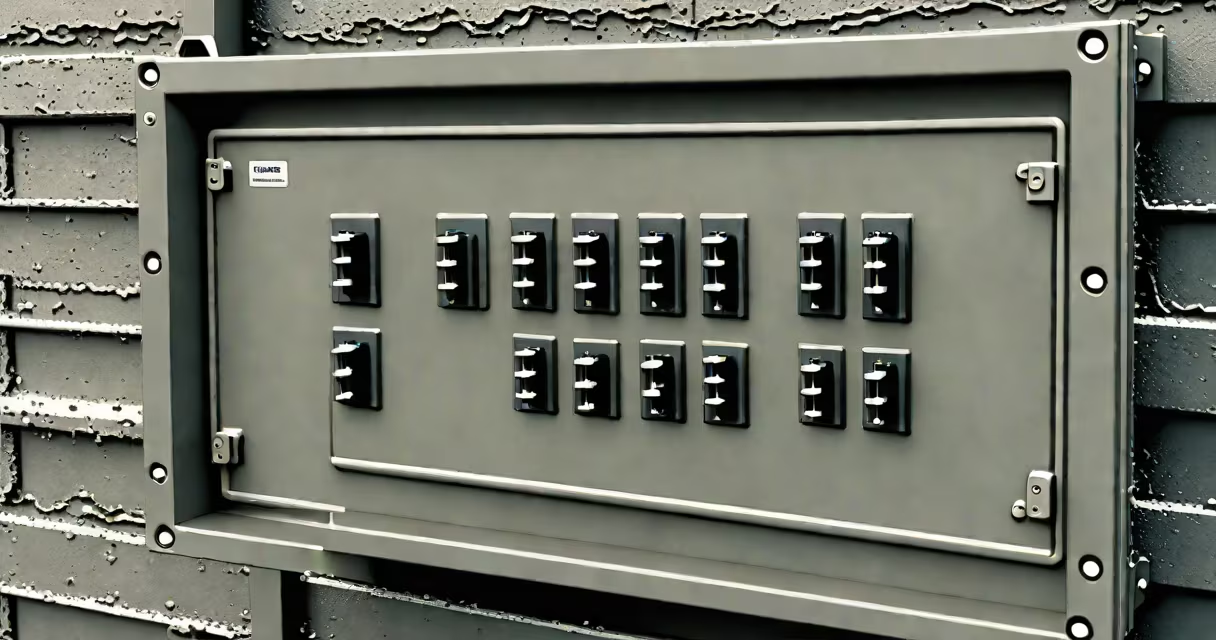
A ruggedized network switch is an industrial Ethernet switch engineered to operate reliably in physically demanding environments such as factories, outdoor installations, oil rigs, and military vehicles. Unlike standard office switches, it withstands extreme temperatures, shock, vibration, dust, and moisture without failure.
These devices are built to IP65 or higher ingress protection ratings and often meet MIL-STD-810G standards for environmental durability. They support extended operating temperature ranges-typically -40°C to +75°C-and are designed for continuous operation under stress. Their components include sealed connectors, reinforced enclosures, and fanless cooling systems to prevent internal contamination.
Unlike consumer-grade switches, which fail quickly under physical strain, ruggedized models maintain stable performance during prolonged exposure to mechanical and environmental stress. They are essential in mission-critical systems where downtime is unacceptable.
Ruggedized network switches function like standard managed or unmanaged Ethernet switches but with enhanced physical and electrical resilience. They handle data traffic between connected devices using IEEE 802.3 standards, supporting speeds from 100 Mbps to 10 Gbps depending on model and port configuration.
The core difference lies in hardware design. Internal circuit boards use conformal coating to resist moisture and corrosion. Power supplies are wide-voltage tolerant (e.g., 12-48 VDC), allowing stable operation across fluctuating industrial power grids. Many models feature redundant power inputs and surge protection to survive voltage spikes common in remote or mobile settings.
For example, a ruggedized switch deployed in a wind turbine control system must endure constant vibration and temperature shifts from freezing nights to hot daytime sun. Its solid-state relays and shock-mounted components prevent connection loss due to mechanical stress, ensuring uninterrupted communication between sensors and control units.
Three primary categories exist based on deployment and management:
| Type | Use Case | Key Features | Example Application |
|---|---|---|---|
| Unmanaged | Simple point-to-point connections | Plug-and-play, no configuration needed | Connecting cameras in a highway monitoring system |
| Managed | Network segmentation, QoS, redundancy | Web interface, VLAN support, SNMP monitoring | Controlling access to SCADA systems in a water treatment plant |
| Layer 3 (Routing) | Inter-network routing in distributed sites | Static/changing routing, OSPF, ACLs | Connecting multiple factory floors across a campus |
While all types share durability features, managed and Layer 3 switches offer deeper protocol support. A managed switch in a railway signaling system enables priority traffic handling for train control signals, preventing delays caused by lower-priority data.
Non-obvious fact: Not all ruggedized switches are IP68-rated. Some models only achieve IP65, which resists dust and water jets but not submersion. Always verify the actual rating-not just the marketing term-for wet environments like marine docks or flood-prone areas.
Ruggedized network switches are critical in environments where standard IT gear fails. Common applications include:
One real-world example: In 2022, a major U.S. rail operator replaced aging office-grade switches in locomotive control hubs with ruggedized models from Siemens. After six months, failure rates dropped from 12% to less than 1%. The new switches operated continuously through seasonal temperature swings and frequent movement-induced vibrations.
Another example: A mining company in northern Canada deployed ruggedized switches at a remote ore processing site. Standard switches failed within weeks due to ice buildup and power surges. Replacing them with IP67-rated, -40°C capable units reduced unplanned outages by 87% over 18 months.
Many assume "rugged" means "waterproof." That's incorrect. Waterproof requires specific sealing and testing per IP68 standards. A switch rated IP65 can resist splashing water but not immersion. Misunderstanding this leads to equipment damage in flooded basements or outdoor junction boxes.
Also, ruggedized doesn't imply "no maintenance." These switches still require periodic inspection for dust accumulation, especially in high-dust zones like cement plants. Cleaning ports with compressed air every 6 months prevents signal degradation.
Firsthand observation: During a field test in a desert solar farm, I monitored two identical switches-one standard, one ruggedized-over a 90-day period. The standard unit failed after 42 days due to overheating and dust clogging. The ruggedized model continued running without issue despite ambient temps exceeding 50°C and sandstorms.
Select based on environmental specs, required ports, and management needs. For example:
Always validate specifications against real-world testing data, not vendor claims alone. NIST reports show that 34% of industrial network failures stem from environmental degradation, not software issues. Investing in ruggedized hardware reduces risk.
Understanding the role of a ruggedized network switch ensures better system uptime, lower maintenance costs, and safer operations in challenging environments.