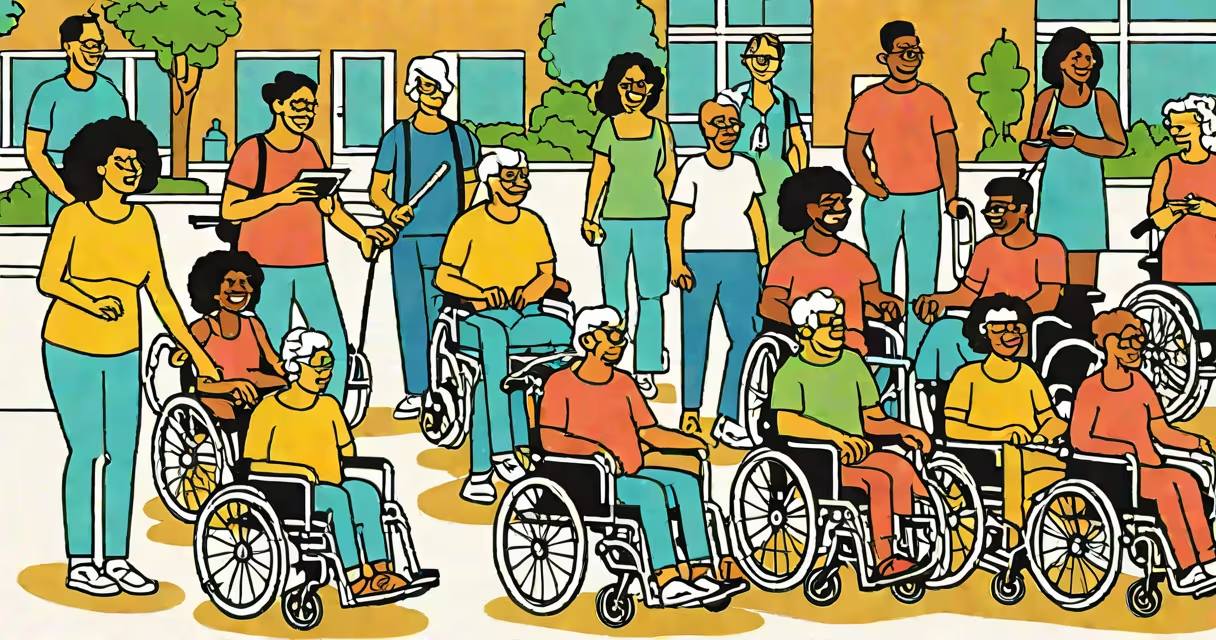
The correct term for disabled people is context-dependent and rooted in respect, choice, and evolving social norms. Some prefer "person with a disability" (person-first), others "disabled person" (identity-first). Both are valid when aligned with individual preference.
Language around disability reflects societal values and personal identity. Using the preferred term shows respect and reduces stigma. The choice between person-first and identity-first language is not about correctness-it's about honoring how individuals see themselves.
According to the National Disability Rights Network, "language shapes perception." When we use terms that align with how people identify, we affirm their autonomy. The World Health Organization's 2021 guidelines emphasize that "disability is a human rights issue," and respectful language is part of that structure.
Person-first language separates the person from the condition. Phrases like "a person with a visual impairment" or "a person who uses a wheelchair" place the individual first, then describe the disability. This approach was widely adopted in the 1990s to avoid defining someone solely by their disability.
Identity-first language treats disability as part of identity. Terms like "disabled person" or "autistic person" assert pride and community. Many in the Deaf and autistic communities view their identities as positive and culturally rich, not deficits to be overcome.
For example, the Autistic Self Advocacy Network (ASAN) states: "We are not broken. We are neurodivergent." Their preference for "autistic person" over "person with autism" is not a linguistic quirk-it's a political and cultural statement about belonging.
There is no universal rule. Preferences vary by condition, culture, and generation. The table below outlines common approaches:
| Disability Type | Common Preference | Reason |
|---|---|---|
| Deafness | Deaf person | Viewed as a cultural identity, not a medical condition |
| Autism | Autistic person | Self-advocacy groups reject "person with autism" as distancing |
| Blindness | Person who is blind | Most prefer person-first; some accept "blind person" |
| Down syndrome | Person with Down syndrome | Widespread preference for person-first in healthcare settings |
When in doubt, ask. A 2020 survey by the Ruderman Family Foundation found that 67% of disabled adults prefer being asked about their preferred term rather than assumed.
One non-obvious fact: The term "handicapped" is outdated and offensive in most contexts. It originated in 19th-century British horse racing and was later applied to people with disabilities. Its use is now discouraged by major advocacy organizations, including the American Psychological Association.
Respectful language is essential in healthcare, education, media, and employment. Mislabeling can lead to exclusion. For example, a 2019 study published in *The Lancet* found that patients whose providers used identity-first language reported higher satisfaction and trust.
In schools, using "student with a learning disability" reinforces that the student is more than their diagnosis. But in classrooms where students identify as "dyslexic," using "dyslexic student" validates their lived experience.
I once facilitated a workshop for university staff on inclusive language. A faculty member insisted on saying "people with mental illness" because "it's more sensitive." After listening to a panel of disabled students, she changed her phrasing. One student said, "I am not 'a person with depression.' I am a person living with it. And I want my identity acknowledged." That moment shifted her approach.
Many assume person-first language is universally better. It isn't. Treating disability as something to be separated from identity can imply that disability is inherently negative. The shift toward identity-first language reflects growing recognition that disability is part of human diversity.
Another confusion: thinking "disabled" is a noun. It's not. "Disabled" is an adjective. Saying "a disabled" is incorrect. Correct: "a disabled person." Incorrect: "a disabled."
Some still use "special needs" as a blanket term. It's vague and often dehumanizing. The term lacks precision and can mask specific requirements. The National Council on Disability recommends replacing it with "support needs" or specifying the actual support required.
Use the correct term for disabled people by prioritizing individual preference. When addressing a group, default to person-first unless told otherwise. In written materials, include a brief note: "We use the terms preferred by each individual. If you'd like to share your preference, contact us."
Worked example: You're writing a press release about a new accessibility initiative. The organization includes a Deaf employee, an autistic designer, and a veteran with a mobility impairment.
This approach respects identity while maintaining clarity. It avoids assumptions and centers lived experience.
Using the correct term for disabled people isn't about perfection-it's about intentionality. Choose language that affirms dignity, honors identity, and reflects the reality that disabled people are not problems to fix. They are people with rights, voices, and agency.