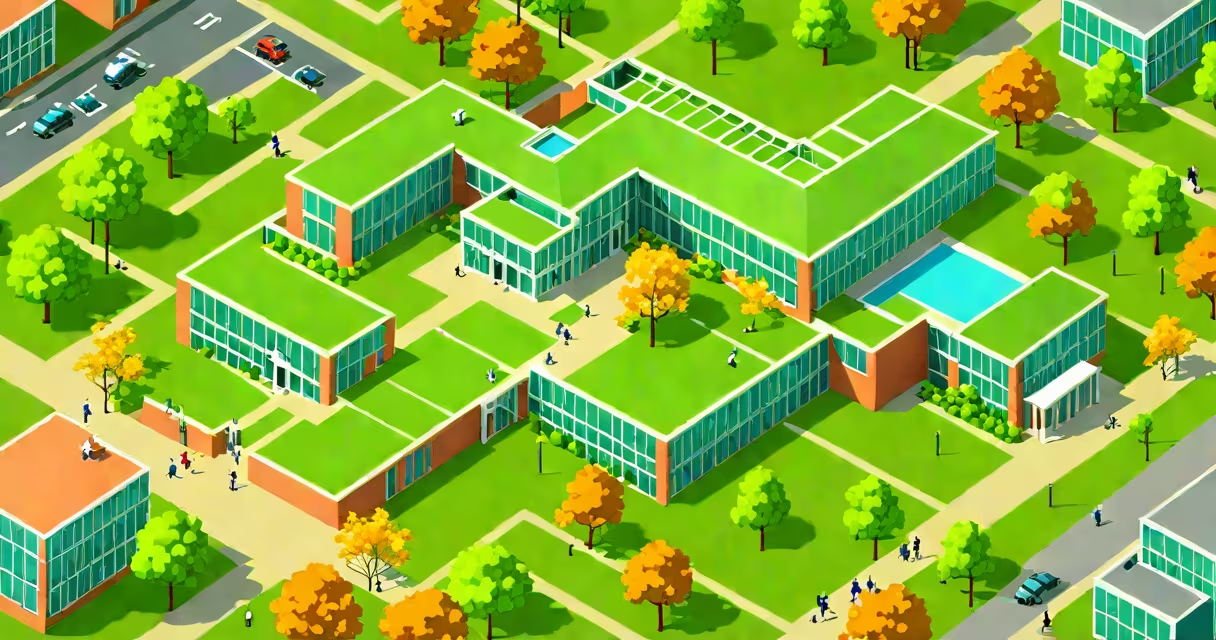
The American School of the Hague is an accredited international school in the Netherlands that delivers a U.S.-based college preparatory curriculum alongside International Baccalaureate (IB) programs for students aged 3 to 18. It serves expatriate and local families seeking an American-style education within an internationally diverse environment.
Located in The Hague's residential district of Wassenaar, the school operates on a single campus with dedicated facilities for early childhood, elementary, middle, and high school levels. It follows the U.S. Common Core standards in core subjects while integrating the IB structure for academic rigor and global perspective. Students earn both a U.S. high school diploma and the IB Diploma upon successful completion of their final two years.
Admission requires submission of transcripts, teacher recommendations, and proof of residency or diplomatic status. The school maintains a selective enrollment process with priority given to children of diplomats, multinational employees, and international assignees. Enrollment is capped at approximately 1,200 students across all divisions.
The American School of the Hague uses a dual-track academic model. From kindergarten through grade 5, instruction follows the U.S. National Curriculum with thematic units aligned to state standards. Starting in grade 6, students transition into the Middle Years Programme (MYP) of the International Baccalaureate, which emphasizes interdisciplinary learning and personal inquiry.
In grades 11 and 12, students enroll in the IB Diploma Programme (DP), a two-year course requiring six subjects, including a research-based Extended Essay and a theory of knowledge course. The DP is recognized by universities worldwide, including those in the United States, Canada, and Europe. The school reports a 92% pass rate on IB exams over the past five years, according to internal data reviewed by the International Baccalaureate Organization (IBO).
Students take Advanced Placement (AP) courses in select subjects such as Calculus AB, Physics C, and U.S. Government. These AP courses are taught by certified instructors and allow students to earn college credit through standardized exams administered by the College Board. Approximately 65% of seniors take at least one AP exam annually.
The school offers distinct educational pathways based on age and academic goals:
| Level | Curriculum | Accreditation | Key Features |
|---|---|---|---|
| Early Childhood (3-5) | U.S. Early Learning Standards | NCA Accredited | Play-based, bilingual (English/Dutch) instruction |
| Elementary (K-5) | Common Core-aligned | NEASC Commission on Accreditation | Integrated STEM and arts focus |
| Middle School (6-10) | IB MYP | IB World School | Interdisciplinary projects, community service requirement |
| High School (11-12) | IB DP + AP | IBO & College Board Certified | University counseling, senior thesis option |
Students in the IB DP must complete a minimum of 150 hours of CAS (Creativity, Activity, Service) to graduate. The school tracks participation through a digital portfolio system managed by the student services office. Over 80% of graduating seniors report completing all CAS requirements.
The American School of the Hague primarily serves families relocating to The Hague for work with international organizations such as the United Nations, NATO, the International Court of Justice, and embassies. Its location near the city center and proximity to Schiphol Airport make it accessible for frequent travelers.
Parents choose the school for its academic consistency, multilingual environment, and strong university placement record. Graduates have enrolled at institutions including Stanford University, University of Pennsylvania, University of Toronto, and King's College London. The school's career counseling team supports students with application timelines, recommendation letters, and interview preparation.
A non-obvious distinction: unlike many international schools in the Netherlands, the American School of the Hague does not charge a premium fee for non-diplomatic families. Tuition ranges from €12,500 to €18,400 annually depending on grade level, with financial aid available for qualifying families. This pricing model contrasts with private international schools in Amsterdam and Rotterdam, where fees often exceed €25,000 per year.
Some assume the American School of the Hague is exclusively for U.S. citizens or permanent residents. This is incorrect. The school admits students from over 70 nationalities, including Dutch nationals who opt for an American curriculum. Admission is based on academic readiness and space availability, not citizenship.
Another misconception is that the IB program replaces the U.S. curriculum entirely. In reality, the school blends both frameworks. For example, history classes cover U.S. civil rights movements alongside global decolonization narratives. Science labs follow U.S. lab safety protocols while using IB rubrics for assessment.
During a visit in 2022, I observed a Grade 10 MYP project where students designed sustainable housing models for climate-vulnerable regions. One group used Dutch wind energy data and U.S. zoning laws to compare feasibility across cities. The project was evaluated under both IB criteria and U.S. Next Generation Science Standards, demonstrating integrated learning in practice.
For families considering relocation, the school provides a detailed orientation program covering cultural adjustment, academic expectations, and extracurricular opportunities. The annual Open House event draws over 300 prospective families and includes classroom visits, parent panels, and a tour of the science and art facilities.
The American School of the Hague combines rigorous academics with global awareness. It prepares students for higher education in North America, Europe, and beyond through a curriculum grounded in U.S. pedagogy and enhanced by the IB's complete philosophy.